When to Start College Essays: The Summer Timeline
Aug 03, 2026
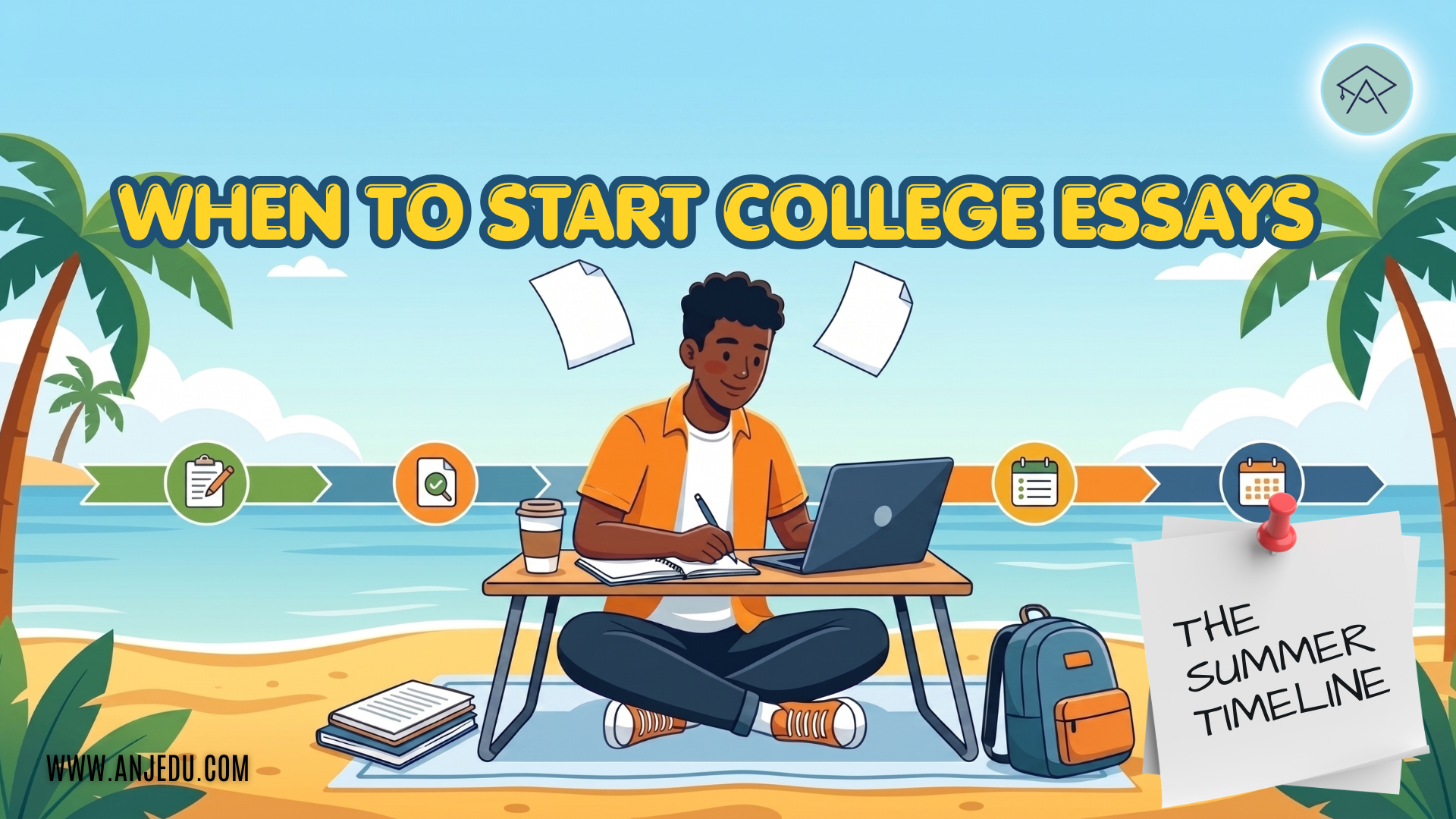
The honest answer to when to start college essays is earlier than most families expect: the middle to end of junior year, with the real work happening over the summer before senior year.
Not because starting early is virtuous. Because of what senior fall actually looks like. Coursework, activities, deadlines, recommendation letters, testing, and a stack of supplemental essays all land at once. If your personal statement is still unwritten in September, it competes with all of that — and it loses.
Here's the timeline that works, why August 1st is the hinge point, and what to do if you're reading this later than you'd like.
The Short Answer
Aim to finish your main essay — and ideally most of your supplementals — before senior year begins.
For students starting as juniors, that means using the summer between junior and senior year as your writing window, with applications ready to submit by late August. For students starting in senior fall, the timeline compresses and you prioritize instead. Both work. What doesn't work is waiting for inspiration in October.
Why the Summer Window Matters
Two things make summer the right answer to when to start college essays.
You have time you won't have later. Senior year fills up fast, and the personal statement is the one piece of the application that rewards unhurried thinking. It needs multiple drafts and, ideally, a rest period between them — a few weeks where you set it aside and come back with fresh eyes. That gap is only possible if you started early enough to afford it.
Finishing early frees your senior year. Students who submit in late August spend their fall on classes, activities, and actually enjoying the year — not scrambling. And since colleges look closely at first-semester senior grades, protecting that fall is a strategic move, not just a comfortable one.
When to Start College Essays: A Month-by-Month Timeline
Middle to end of junior year. Do the groundwork: the self-reflection, the strengths inventory, the conversations with people who know you well. Identify your story. This is thinking time, not drafting time.
June. Start drafting the personal statement. Also begin your supplemental essays — more on why that's possible below.
July. Keep drafting and refining. Aim to wrap up summer jobs, programs, and family travel by July 31st if you can, so the first weeks of August are clear.
August 1st. The Common App opens for the new cycle. Check for changed supplemental prompts and complete the college-specific questions.
Early-to-mid August. Finalize everything. Proofread, get a trusted adult to review, and submit.
September onward. Focus on your grades, your activities, and the parts of senior year you'll actually remember.
And if you’re reading this in August before your senior year (or later), take a deep breath and simply start where you are (and read the section below). Get organized, create a schedule based on when the applications need to be submitted, and adhere to the schedule.
Why You Can Write Supplementals in June and July
This surprises students: you don't have to wait for August to start supplemental essays.
The Common App's seven personal statement prompts have stayed the same for several years running, and only a small percentage of college-specific prompts change from one cycle to the next. So you can pull last year's prompts — visible in the Common App once you create an account — and write the bulk of your supplementals in June and July, then adjust in August for anything that shifted.
That single move is the difference between a manageable August and a frantic one. Most students who fall behind do so because they treated August 1st as the starting gun rather than a checkpoint.
What Actually Happens on August 1st
Worth knowing precisely, because it affects your plan.
The Common App closes for a few days in late July and reopens August 1st with the new cycle. When it does:
- Your core profile rolls over. Demographics, education, activities, and your personal statement carry forward if you created an account earlier.
- The "My Colleges" tab is wiped. Supplemental essays, preferred majors, and college-specific answers entered before the rollover are permanently erased — which is why you keep supplemental drafts in your own documents, never only in the platform.
- Don't invite recommenders before August 1. Those invitations get deleted in the rollover, and you'll have to send them again.
- Expect congestion. August 1st is one of the busiest days on the platform, and slowdowns or brief outages aren't unusual. Another reason to arrive prepared rather than starting that day.
You can create an account and fill in the profile and family sections any time — doing that early saves real work later.
The Writing Schedule That Works
Knowing when to start college essays matters less than having a schedule once you do.
The rhythm we recommend: an hour and a half to two hours a day, six days a week. Put it in the planner and adhere to it. That's what professional writers do, and it works for the same reason — it removes the daily decision about whether to write.
Students who schedule writing time finish. Students who wait for inspiration often don't. And if the schedule stops working, tweak it rather than abandoning it. Personalize the timeline to your life; the structure matters more than the specific hours.
A few things to have in place alongside the writing:
- Ask for recommendation letters by the end of junior year — April or May — so teachers can write over the summer and you have time to ask someone else if one declines.
- Request your transcript so you have it when applications need it.
- Set up one document per college with that school's prompts and word limits pasted in, so nothing gets lost.
If You're Starting Senior Fall
No worries — and this is the part students most need to hear.
Start exactly where you are. The timeline compresses, and you prioritize: personal statement first, then supplementals for your earliest deadlines, working outward. Plenty of students begin in the fall of senior year and submit strong applications; they simply don't have room for the long rest-and-revisit cycle, so their drafting has to be more focused.
If you're starting as a senior, aim to have everything completed by the end of December, and work backward from your specific deadlines rather than a generic calendar.
The Bottom Line
The best time to start college essays is the middle to end of junior year, with drafting through the summer and everything finished before senior year begins. Use June and July for the bulk of the writing, treat August 1st as a checkpoint rather than a starting line, and keep a real writing schedule rather than waiting to feel ready.
Do that, and the essay stops being the thing hanging over your senior year. It becomes the thing you already handled.
Dates and prompts shift between cycles — confirm the current calendar at commonapp.org for your application year.
This is part of our series on the college essay. For the full picture — brainstorming your topic, structuring your drafts, and telling a story only you could tell — see our main guide, The College Essay: Telling Your Standout Story.